
AI-Generated Website Design Problems
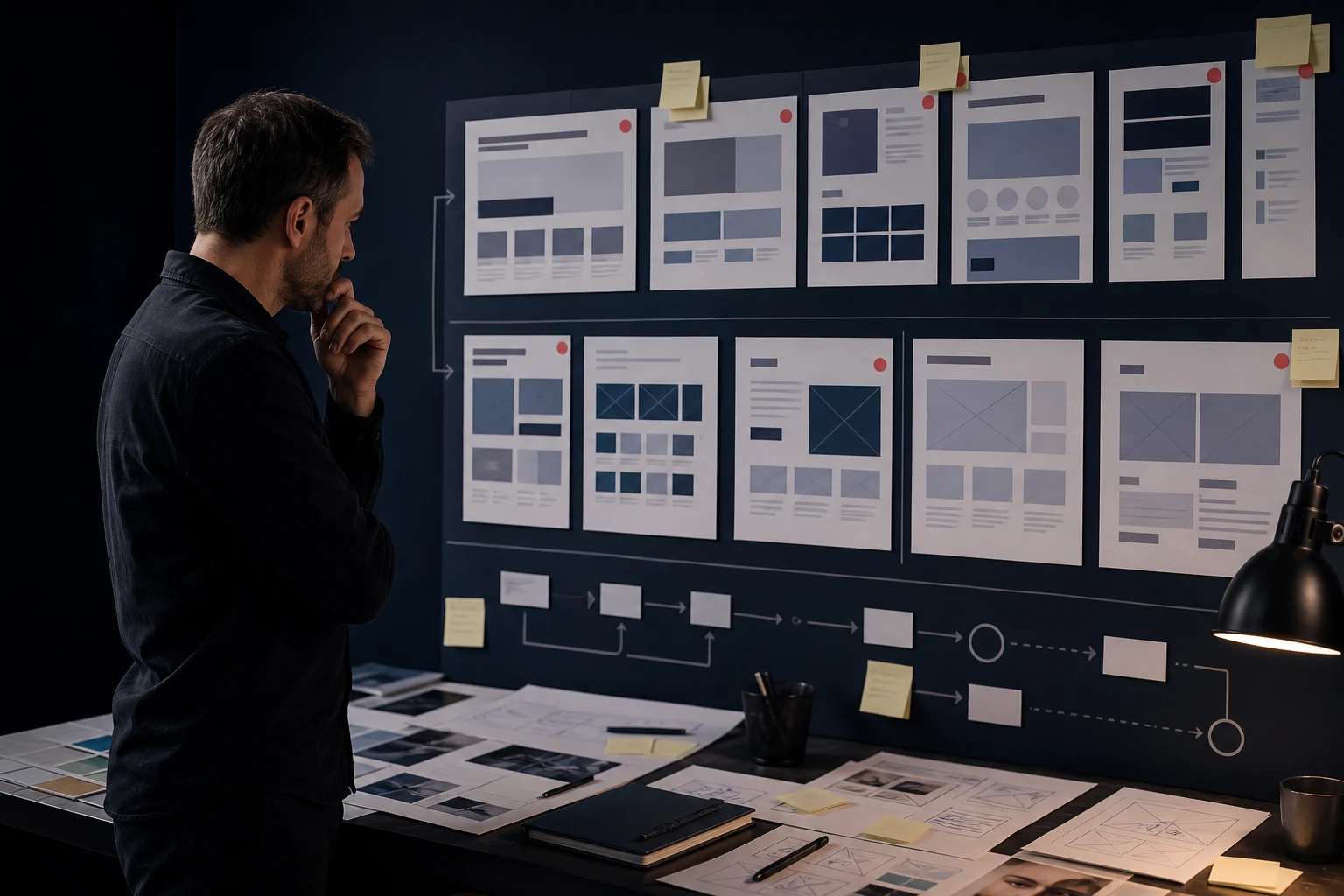
AI-generated website design problems usually show up as weak hierarchy, vague copy, samey visuals and low trust.
AI-generated website design problems usually appear when a site looks complete but does not guide, reassure or persuade visitors properly. The page may load, the sections may be neat and the form may exist, yet the design can still feel generic, vague or low-trust. Those problems matter because website design is part of the buying decision.
The most useful way to review an AI-generated site is to separate surface polish from commercial quality. A design can be attractive and still weak if it does not explain the offer, show credibility, support mobile users or make the next step clear.
Generic layout
Generic layout is the design problem most people notice first. The site follows the same sequence as countless other generated pages: hero, cards, process, testimonial, FAQ, contact. That order may be fine, but only if each section contains specific information and the page gives priority to what matters most.
If every block has the same weight, visitors cannot tell what to read first. A better layout creates a path. It introduces the offer, names the visitor’s problem, explains the service, builds trust and asks for action at the right moment.
Weak visual hierarchy
AI tools often make everything look clean, but not everything should be equal. Important information should stand out. Secondary details should support it. Repeated cards, similar heading sizes and identical spacing can make the page feel flat.
Weak hierarchy affects conversion because visitors skim before they commit. If they cannot quickly identify the service, proof and next step, they may leave even though the site technically works.
Samey visuals
Samey visuals include default gradients, glass cards, common icon styles, abstract backgrounds and colours that feel chosen from a trend rather than a brand. These choices can make the site look modern in a preview while making it harder to remember afterwards.
- Cards all use the same shape and spacing.
- Icons do not explain the service.
- Images create mood but not meaning.
- Accent colours are used everywhere.
- The design could fit several unrelated businesses.
Samey visuals are not only an aesthetic issue. They reduce differentiation, and differentiation helps trust.
Vague copy
Design and copy are inseparable. If the words are vague, the design will feel vague. AI-generated copy often sounds confident but avoids specifics. It may promise efficiency, innovation and growth without saying what the company actually does or what the customer gets.
Repairing design often means rewriting section copy. Replace broad claims with real service detail, useful examples, process explanation and clearer proof. If the wording is also affecting search intent, AI website SEO repair may be relevant alongside the design pass.
Weak trust
Visitors need reasons to believe the business. AI-generated sites often leave trust signals too late or make them too vague. A testimonial block with generic praise is less useful than a clear process, relevant proof, realistic scope and plain explanation of what happens next.
Trust is especially important when the site is new. If there are no case studies, use other confidence signals: clear guarantees, process transparency, qualifications, examples of work, service boundaries or honest next-step wording.
Poor mobile rhythm
Many generated designs are judged on desktop first. On mobile, the same design can turn into a long stack of similar cards. Headings may wrap awkwardly, CTA buttons may crowd the text and spacing may feel either cramped or excessive.
Mobile rhythm affects trust because many visitors will only see the phone version. A site that looks premium on desktop but tiring on mobile is not ready. Always check the actual 390px experience before signing off an AI-built design.
Missing brand personality
Brand personality does not mean gimmicks. It means the site feels connected to how the business speaks, thinks and helps customers. AI tools cannot reliably infer that from a short prompt. Without it, the design may feel neutral to the point of invisibility.
Use tone, examples, service naming, proof, constraints and visual choices to make the site more specific. If the website was built through ChatGPT Work or a similar workflow, a ChatGPT Work website repair review can also check whether generated structure and implementation need stabilising.
Conversion issues
A conversion problem appears when the page asks for action before it has created enough clarity or confidence. The button may be visible, but the visitor may not know why they should click it. AI-generated pages often include CTAs because landing pages are supposed to have CTAs, not because the journey has been thought through.
A better conversion path connects problem recognition, service explanation, trust and action. Sometimes this is a design issue. Sometimes it is a copy issue. Often it is both.

What to check before launch
- Can visitors understand the offer without reading the whole page?
- Does the design prioritise important information?
- Does the copy include real business detail?
- Are trust signals visible before the final CTA?
- Does the mobile version feel deliberate?
- Are all internal links and forms working?
- Does the site need improvement, redesign or rebuild?
For a broader launch check, use an AI website builder check to review readiness beyond visual design.
Subject-specific checklist
- Hero message is specific, not a broad AI-generated slogan.
- Service cards explain different useful points.
- Colours, fonts and imagery fit the business tone.
- Page sections appear in a logical buying order.
- CTA copy matches the level of visitor confidence.
- Mobile headings, forms and cards fit cleanly.
- Trust signals answer real buyer doubts.
- There is a clear repair, redesign or rebuild decision.
When to stop editing
Stop making random design edits when each change creates another uncertainty. If you keep changing colours, cards or prompts but the site still feels generic, the problem is probably not one visual detail. It is the overall direction. At that point, AI website design repair can give the work a clearer route.
Accessibility and readability problems
AI-generated design can also create quieter usability problems. Text may sit on low-contrast backgrounds, headings may be too large for mobile screens, buttons may rely only on colour and long card grids may make scanning harder. These issues are not just technical details. They affect whether visitors can comfortably use the site.
Readability is part of trust. If a visitor has to pinch, reread, hunt for the next step or work around cramped spacing, the site feels less professional. A design review should check contrast, line length, heading wraps, button clarity and form usability as part of the same commercial review.
Service structure problems
Another common issue is a service structure that looks neat but does not match how customers buy. AI may create three balanced service cards because the layout wants three cards, not because the business has three equally important services. That can make the offer harder to understand.
Good repair work reshapes the structure around the real decision. Main services should be clear, supporting services should not compete with them and the page should show visitors where to go next. If the service structure is wrong, visual polish will not fix the confusion.
Signs the design is affecting enquiries
The design may be affecting enquiries if visitors arrive but do not contact you, if people ask basic questions the page should have answered, or if the wrong enquiries keep coming through. It may also show up as feedback that the site looks nice but does not explain the business clearly.
In those cases, review the path from first impression to form. The issue may be missing proof, unclear service boundaries, weak CTA wording or a layout that gives decorative content more priority than buying information.
Fix The Design Problems That Weaken Confidence
AI-generated website design problems are usually practical problems: unclear hierarchy, weak trust, vague copy, samey visuals and poor mobile flow. Fixing them means treating the site as a business asset, not just a generated layout that needs a nicer colour palette.